A bit short on time? We've got you covered.
Check out the best whiteboard explainer videos in our compilation video here:
These are, hands down, some of the best whiteboard videos and best whiteboard animation videos we've seen from real B2B and B2C brands.
But if you can give us a few minutes…
One of the biggest challenges to any business is simplifying complex ideas into digestible content for your audience.
And this is universal, regardless of your size, industry, or if you're B2B or B2C.
There's no denying the appeal of video marketing in today's economy. Everyone's using video, even on social media content creation, like Instagram, TikTok and YouTube channels.
And therein lies the problem: how do you stand out in a visual way?
Potential customers won't stay interested beyond just three seconds and are naturally skeptical of any sales pitch.
So how do you stay memorable more than your competitors?
This is where whiteboard animated explainer videos come in.
So what is a whiteboard explainer video, exactly?
It is the ultimate tool for transforming information-heavy presentations into engaging and easy-to-understand narratives.
This catchy animation style fuses clever doodle visuals with storytelling to connect with your audience, leaving a lasting impact that drives conversions.
The simplicity of this type of video content doesn't just capture attention. They clarify complex topics, educate, and drive home your message like no other medium.
What Is Whiteboard Animation?
Whiteboard animation is a style of explainer video that simulates hand-drawn illustrations on a whiteboard in real time, in sync with voiceover narration. Rather than live-action footage or polished 3D visuals, it uses simple doodles that build progressively on screen, mimicking the experience of someone sketching an idea out for you in person.
At its core, whiteboard animation combines three elements: a simulated hand-drawn style, a clear narrative script, and voiceover, all timed to reveal information one beat at a time rather than all at once. That's what makes it effective for explaining complex ideas. It mirrors how people naturally process an explanation.
It also explains why the format has outlasted most animation trends. A viewer who has never heard your idea before needs it paced, and a hand drawing one element at a time is the most honest way to pace it.
Why Whiteboard Explainer Videos Still Work in 2026
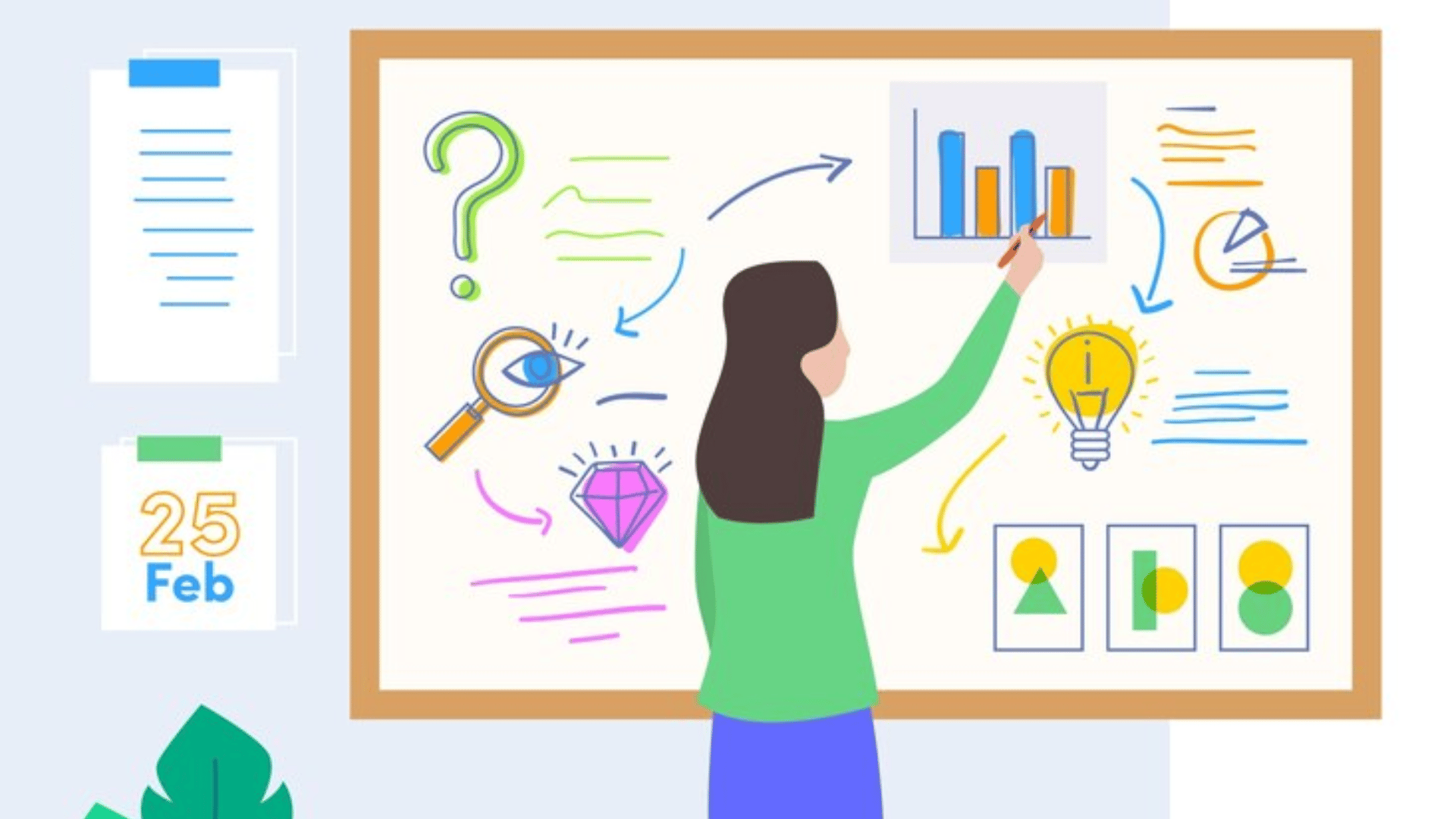
Image Source: Freepik
1. Simplifies Complex Information
The biggest advantage of whiteboard marketing videos is their ability to take highly technical, abstract, or detailed content and transform it into a visual narrative that’s easy to follow.
Through a step-by-step process, complex ideas are broken down into bite-sized pieces, helping viewers absorb information effortlessly.
It’s why businesses create whiteboard animation when trying to explain intricate topics like SaaS platforms, blockchain technology, or medical procedures.
2. Keeps Viewers Engaged
Let’s face it—attention spans are shrinking.
Yet whiteboard is the longest style we produce, at a median of 112 seconds across our explainer video benchmark of 1,368 videos. Length matters less than keeping viewers engaged.
In B2B settings, executives and decision-makers don’t have time to sit through hours of dense content.
That’s where the magic of whiteboard animation comes in.
With its dynamic combination of visuals, narration, and hand-drawn elements, these videos keep viewers hooked from start to finish.
The unfolding visuals create an engaging story, making it hard to look away.
3. Highly Customizable for Any Brand
Whiteboard explainer animation offers endless creative possibilities.
Whether you want to add your brand’s signature colors, stylized fonts, or unique visuals, whiteboard animation can be fully tailored to align with your business’s tone, style, and message.
This flexibility makes it ideal for B2B businesses aiming to maintain a consistent brand identity while communicating complex ideas.
As a bonus, you can bring things full circle with your customers by using testimonial videos where they speak on their own personal experiences with your brand.
4. Boosts Information Retention
Studies show that people are more likely to remember information presented in visual formats.
By combining images with narration, whiteboard explainer videos help reinforce key points, making it easier for your audience to retain the information.
In fact, people remember 80% of what they see and hear, making these videos an effective tool for increasing understanding and retention.
Check out some more benefits of whiteboard animation videos.
What Makes Great Whiteboard Animation Explainer Videos?
Image Source: Freepik
Crafting a whiteboard explainer video that hits the mark requires a blend of creativity and strategy.
Here are the key elements to focus on:
1. Clear and Concise Script
Every successful whiteboard explainer video begins with a well-crafted script.
Your script should be concise, to the point, and free from jargon.
Focus on presenting the most important information while guiding viewers through a clear narrative that addresses their pain points.
2. Visual Storytelling
At the heart of whiteboard videos for companies is visual storytelling.
The high-quality video animation should directly complement the script, illustrating key concepts and ideas as they unfold.
The hand-drawn animation adds an element of simplicity and charm, making even the most technical subjects feel approachable.
3. Engaging Voiceover
As you create whiteboard animation, you’ll find that a professional voiceover for your explainer videos is essential to delivering your message with impact.
The tone and style of the narration should align with your brand’s personality, whether it’s professional and authoritative or casual and friendly. To maintain consistency in your explainer videos, an AI voice generator can be a practical alternative when professional voice talent is unavailable.
The voiceover should guide viewers through the video with clarity and energy.
4. Consistent Flow
Flow is key to keeping your audience engaged.
Each scene in the video should flow seamlessly into the next, with logical transitions between ideas.
Keep the pacing steady—neither too slow nor too fast—so viewers have enough time to absorb the content without losing interest.
5. Call to Action (CTA)
Never leave your audience hanging! Every whiteboard explainer video should end with a strong call to action (CTA).
Whether it’s encouraging viewers to learn more, sign up for a demo, or contact your team, your CTA should be clear and actionable.
Looking at video CTA examples can help ensure it effectively guides viewers toward the next step.
5 Types of Whiteboard Animation Videos (Based on Style and Technique)
Whiteboard animations are rooted in classic whiteboard videos—a style that showcases artists drawing everything on a whiteboard.
Their hand movements and sketches are captured in real time through live recording and later edited into a seamless final video, just like in the above video example from RSA.
In this whiteboard video style, you can see how the artist draws each element, explains concepts, moves across the whiteboard, erases drawings, transforms them, and adds new details to progress the story.
Creating and filming classic whiteboard videos required meticulous effort, making them quite expensive (around $10,000 to $20,000 per minute) and time-consuming.
That’s why brands have turned to whiteboard animation videos. These animations are far more budget-friendly and offer much more creative flexibility.
From timeless hand-drawn styles to innovative digital variations, animated whiteboard videos have a distinct style that can enchantingly communicate your brand message.
Let’s explore the unique charm of different types of whiteboard video animations:
15 Custom Whiteboard Explainer Videos & Whiteboard Animation Examples
Now that you’re armed with the knowledge you need to do your own video, chances are you’re wondering where to start, or what to say.
If so, don’t fret, this happens to all of us creative types too, not just beginners, so you’re in good company.
A great way to get that spark of inspiration to get you started is by checking out what other people are doing, and analyzing what makes it work for them.
To help, here are 12 great whiteboard animation examples to give you that motivational boost and get your ideas flowing! Let’s dive in.
If these use cases inspire you and you want to try making these videos yourself, this blog about the best whiteboard animation maker tools is a must-read to get more hands-on information before actually getting started. Do check it out!
What Is Whiteboard Storytelling?
Whiteboard storytelling is a narrative-driven approach to whiteboard animation. Rather than simply listing product features or process steps, it wraps them in a story: a character, a conflict, and a resolution.
It's the difference between showing what a product does and showing why it matters to someone the viewer recognises as themselves. CitiBank's mortgage explainer (#9 above) is a clear example. It uses an audience surrogate character to walk through the emotional stakes of relocating, not just the mechanics of a home loan. The European Commission's interoperability campaign (#12 above) does the same for a policy topic, using two out-of-sync violinists in place of a technical diagram.
Whiteboard storytelling works best for complex, high-stakes decisions in healthcare, finance and policy, where facts alone don't move people to act but a relatable story does. The test is simple: if you removed the product from the video, would there still be a story left? If not, you have a feature list with drawings on it.
How Broadcast2World Produces Whiteboard Explainer Videos
Every whiteboard video on this page came out of the same process, and it doesn't start with the drawing.
Broadcast2World builds the narrative first, using our Why-First Framework. The style decision comes after the story decision.
Whiteboard animation gets chosen when that story needs pacing. It's why the CitiBank video reassures instead of instructing, and why the European Commission could carry a policy topic on a single metaphor about two violinists.
From there it's end to end: script, storyboard, illustration, voiceover, animation and final render, with one project manager throughout. You can see the full style range on our whiteboard animation services page, or compare studios in our roundup of the best whiteboard animation companies.



.webp)







No Comments Yet
Let us know what you think