



| Explore 15 best 2D animation examples from creative brands using both modern and traditional 2D animation styles. Learn how 2D animated videos use different animation types, cartoon styles, and techniques to tell engaging stories and boost brand appeal. This guide highlights 2D animation drawings, video examples, and production methods that inspire marketers and creators alike. |
Short on time? I've got you covered!
Check out our compilation of the Best 2D Animation Examples here:
But if you want to explore these examples in detail, let me give you something to ponder about...
Who knew the captivating world of 2D animation, now a staple in entertainment, had roots burrowing all the way back to the 1800s?
Since then, this versatile medium has blossomed into a powerful tool not just for TV shows and video games, but for B2B brands too.
It’s perfect for breaking down complex concepts or showcasing product demos in an easy-to-understand and visually engaging way.
With 2D animation videos, businesses can tell compelling stories, evoke emotions, and deliver clear, impactful brand messages.
Curious to learn how?
Let’s dive into this blog to explore what 2D animation is, how it works, its role in B2B branding, and check out some top-notch 2D animation examples.

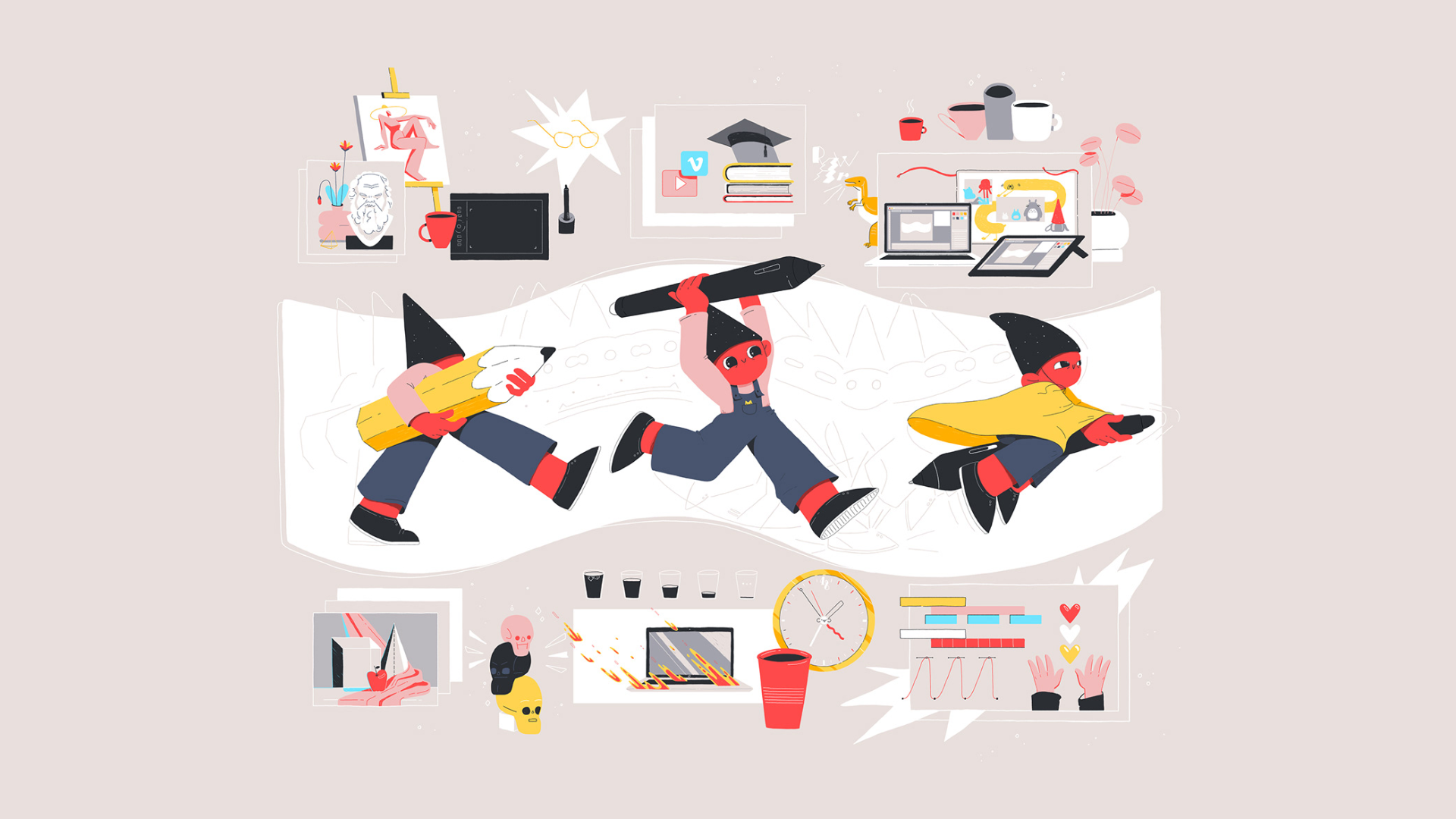
Source: Dribble
It is a form of drawn animation that works by creating the illusion of movement in a flat, two-dimensional space — where characters and scenes are crafted frame by frame, either by hand or digitally.
Now that you know what is a 2D animation, you might be wondering—is it the same as 3D animation?
Not quite! Unlike 3D animation, where characters and objects move through a three-dimensional world, 2D animation is limited to up, down, left, and right movements.
2D basically gives the illusion of depth without actually having any elements in the z-axis. There's a clear difference between 3D and 2D animation. To get a clearer picture of how 2D animation comes together, let’s dive into its production process.
There are three stages involved in creating 2D animations:
Source: Freepik
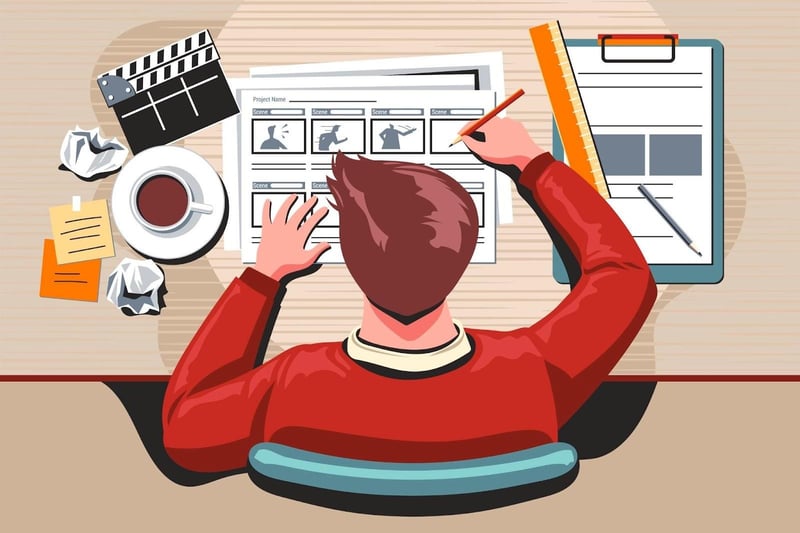
They say the first step is the most important, and that's exactly what this stage is. Here, concept artists and visualizers design characters, sketch background designs, and create storyboards.
Storyboards are like comic strips; they help us visualize the actions and events throughout the entire animation. Once all this is set, we can move to the next step of the 2D animation process.
Source: Freepik
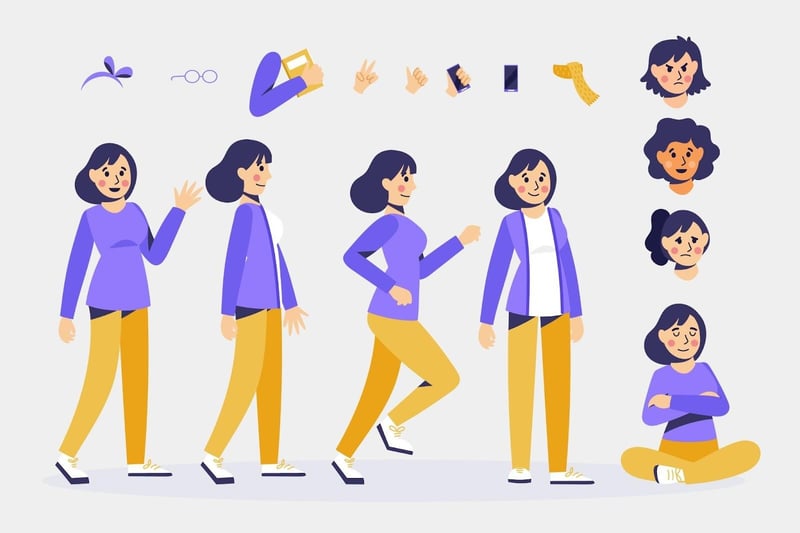
In the production stage of 2D animation, digital artists get busy creating assets from the pre-production designs. These assets, which include characters, backgrounds, and props, are crucial for bringing the storyboard to life.
Layouts, detailing backgrounds, overlays, underlays, and key poses, serve as the bridge between the storyboard and the animation. Rather than drawing each frame, best 2D animators use software like After Effects, working with keyframes to ensure smooth movements.
If your video includes dialogue, voice actors record the scripts, and animators synchronize the characters' mouth movements and expressions with the audio. Finally, special effects are added to enhance scenes, adding more depth and realism.
Source: Freepik
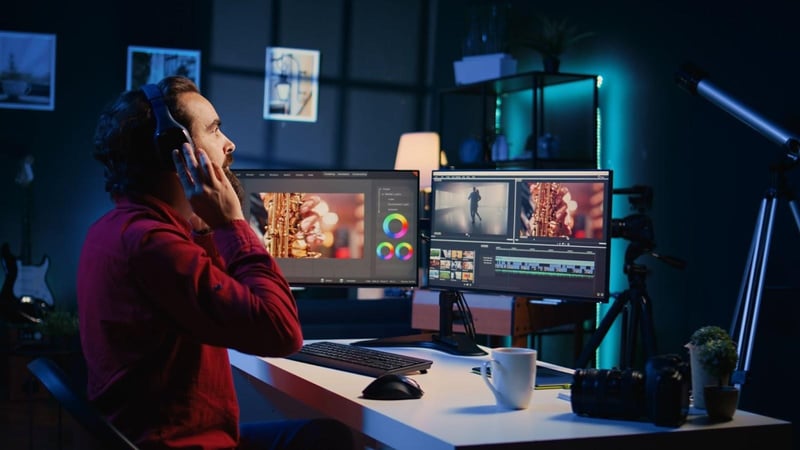
After we have the rough animation, it undergoes a cleanup process where solid, clean lines are added and the frames are colored (in case of frame-by-frame animation). The final frames are then combined with backgrounds and other elements from the pre-production phase.
Intermediate frames, or "tweens," are generated between key images to ensure smooth transitions and fluid movement. We then add final finishing touches like sound design and editing. And just like that, you’ll have your 2D animation ready!
Next, let’s delve into the types of 2D animation. Understanding these will give you a richer view of the various styles and methods used to bring 2D animations to life.
To achieve that captivating 2D animation style, artists rely on various techniques. Here are some of the most popular 2D animation techniques-
In traditional 2D animation, each frame is hand-drawn. Though painstaking, the way this process brings the animated world and characters to life is truly captivating.
Each character or element movement you see in this 2D drawn animation is crafted frame by frame. This results in a timeless animation piece that is both expressive and fluid.
As the name suggests, in this animation, you see flat shapes brought to life using frame-by-frame movement. These shapes are usually made from fabric, paper, or even digital assets. Their movements give a storybook-like feel to the viewers.
This type of animation is used when you want to give 3D-like depth on a budget. Here, 2D animated objects are drawn from a specific angle, often 30 or 45 degrees, to create the illusion of dimension.
This animation style is used in explainer videos, infographics, and even video games to create an immersive feel without actual 3D rendering.
To create digital 2D animation, animators usually don’t draw each frame manually; they use modern tools like After Effects, Adobe Animate, or Toon Boom Harmony.
Using these tools, animators apply techniques such as rigging, tweening, and vector graphics to create smooth, precise, and scalable motion. With this 2D animation style, you get to make videos with the classic 2D charm but faster.
Some other popular 2D animation types are motion graphics, screencast animation, typography animation, whiteboard animation, rotoscope animation, zoetrope animation, clay animation, and retro animation.
Visual content reigns supreme! Today, 68% of consumers prefer watching videos to learn about new services or products, rather than reading ebooks, infographics, presentations, or articles. So, what's the takeaway?
2D animation can leave a lasting impression on your potential customers. It's one of the most popular choices in content marketing today because it’s not only affordable but also delivers impressive results.
What’s great about 2D animation is that it makes content engaging and interactive, helping you build a strong connection with your audience. Here’s why 2D animation explainer video is so crucial for B2B branding-

Source: Freepik
Need affordable promotional videos?
2D animation is your best bet! It’s the perfect solution for creating engaging explainer videos without overspending. Unlike live-action films, which require hiring actors, securing locations, and investing in expensive equipment, 2D animation keeps costs low while still delivering high-quality results.
Companies that choose 2D animation can produce effective and captivating videos without breaking the bank. Its affordability and creative potential make it a popular choice for businesses looking to promote their brand and services cost-effectively.
As mentioned earlier, 2D animation is incredibly versatile. It’s not just great for B2B explainer videos; it also offers endless creative freedom. Companies can customize every element to craft unique, engaging videos that truly convey their message.
With 2D animation, you can design characters and backgrounds that fit perfectly into your story and explore storytelling possibilities that live-action videos can’t match. This flexibility allows you to bring your story to life in a way that really connects with your audience.
Source: Freepik
The main goal of any marketing video is to engage customers, and 2D videos excel at this.
They help you stand out from the competition by creating unique visuals that showcase your brand or style.
Plus, 2D animation offers great flexibility for B2B storytelling, allowing you to craft complex narratives that might be challenging with live-action videos due to time or budget limitations.
2D animation adapts easily to any device, making it a great choice for versatile video production.

Source: Freepik
Videos are naturally easy to share on social channels because they’re visually appealing and entertaining. Animation takes this even further. It helps companies connect with viewers across different platforms, expanding their reach and building a more engaged audience for their product or service.
Seeing examples really helps us understand and learn more. So, let’s expand our knowledge of this creative animation style by exploring some top 2D animation examples.
Why choose 2D animation? Because it’s a blast!
It’s engaging, budget-friendly, and packs a punch when it comes to delivering your message.
2D animated explainer videos do more than just entertain—they educate too, making them perfect for keeping your audience hooked.
But 2D animation isn’t just about conveying information. It’s an art form that brings your brand’s personality to life, showcasing your unique style.
With its colorful visuals, animated characters, and creative touch, 2D animation turns even the simplest ideas into something extraordinary.
Curious to see 2D animation in action? Check out these standout 2D animation video examples and discover how this dynamic medium transforms ordinary concepts into unforgettable experiences!
Explaining fintech products is tough, but with visuals, the struggle is gone. This is why VISA decided to use this 2D infographic video to explain VisaNet +AI, its new offering.
Through the video, the brand introduced how the solution uses artificial intelligence to help deliver smarter authorization, clearing, and settlement for consumers, banks, and merchants.
This 2D infographic video packs in a range of data visualizations—from isometric bar graphs and dotted line charts connecting geometric shapes to spiraling streams of transactional data. It’s filled with stats, forecasts, and plenty of dynamic text that keeps the visuals constantly moving.
One of the most impressive aspects of the video is how it plays with perspective to create a 3D illusion within a 2D space. For example, in a scene showing the front view of a VISA card, the camera angle shifts mid-sequence—and suddenly, the card and its elements, like the balance icon, buttons, and card number, appear on separate layers.
Though the animation remains 2D, the clever use of angles, shading, and lighting gives it a striking 3D effect.
This video works because it creates the visualization of the whole conversation between this AI solution and professionals on screen.
Through the use cases of different professionals like an operations manager and a project manager, the video showcases how the AI helps them resolve their problems with expert care quickly.
The futuristic look of the video, the robotic voiceover, the solution-appropriate infographics animations, engaging motion graphics, and the geometric elements in the video make it quite engaging.
As a construction business, getting your invoices processed before they are due is quite a struggle. RBS used the video to highlight this pain point and then explained how its team of construction industry experts can help you out with this.
It also used the video to emphasize the other range of solutions RBS can provide to fit any business’s needs.
This 2D cut-out animation video uses the whiteboard video format to unfold the storyline. You see the cut-outs of different things and people smoothly opening up and forming the scene.
A hand’s cut-out moves across the scenes and manipulates different elements across the scenes to make the video more engaging, for instance, in a scene, the hand switches on the light of a cut-out lamp.
The way this 2D character animation video uses light and shade to make the flat cut-outs appear distinct from the background was quite impressive.
Talking about the colour palette, apart from the distinct orange color, there are no major colors used.
The new video style makes people curious enough to keep watching. It looks like you are opening up a greeting card, and paper characters keep unfolding as you open up more sheets.
The way the characters and scenes pop up on the screen as the voiceover discusses the worries of businesses or when RBS is discussed as a solution is quite creative.
The collaborative scenes between the characters of the business owners and the RBS team, the visual happy expression of the business owner as his invoice issue is solved—all make viewers see RBS in a credible light.
Teams worldwide rely on SaaS apps every day, but with their use comes the vulnerability of having your data shared in the wrong place. Metomic made this video to highlight this existing issue and to present itself as the solution.
It used this 2D explainer video to tell brands how it protects their sensitive data across the entire SaaS stack without getting in the way of their employees’ work.
The video uses 2D animations, extremely simple characters without any facial details, some motion graphic movements, and detailed 2D screencasts.
It mostly uses the fast movements of the elements to drive the narrative forward—you’ll see spiral-like or crossover movements. It also makes use of animated text and numbers to emphasize the points being told by the voiceover.
The video at times also uses the play of angles to create a 3D illusion on screen, meaning you’ll also see 2D isometric elements in the video.
The video creates a beautiful contrast on screen by using a mix of solid and holographic-colored elements. For instance, the screencast animation of the Slack logo appears in solid colors, whereas the text panels have a holographic shine to them.
This 2D commercial video works because of how effortlessly it takes a concern as a panel and uses it to position itself as a solution.
It starts off by showing a 2D character animation of a man working. He is shown surrounded by 2D logos of collaborative SaaS apps. This was a great way of establishing the deep-rooted use of SaaS apps in today’s office work.
Then, the video also showcases the vulnerability of data breaches via a scene where you see blurred-out sensitive data and animated eyes moving over them.
Next comes the part where it uses the impactful voiceover to explain the efficiency of Metomic. Not only that, it also showcases the tool in action using screencast animation of its integration with Slack.
The video uses the perfect mix of visuals, impactful voiceover, text, and statistics to establish the need for the product in the existing customer’s workflow.
Today, the way people shop has changed. They have too many options to choose from, be it in terms of designs or brands. But they have less time to find exactly what they are looking for. As a result, they are often hesitant to make purchase decisions, and this hiccup negatively impacts the ROI of brands and retail.
Scroble created this video to shed light on this scenario. It wanted to show how people mostly search for clothes online but still crave the offline, physical touch of things while buying them.
Using this explainer video, it introduced itself as the world’s first mobile interaction technology that blends online and offline shopping.
This video uses flat 2D animations and simple character animation without any facial features to lead the flow. It also uses motion graphic elements like abstract lines, geometric shapes, and dynamic angles to showcase how the solution is transforming shopping.
Zooming in on the angle part, most scene transitions in the video are carried out by showing camera shifts from different angles.
About the video color palette, you’ll see a minimalist and neutral color palette throughout the video—be it the characters, the dresses, the settings, or the 2D phone screencasts. This choice helps the scenes pop against the plain white background.
The way the video leverages creativity to showcase the need for a more combined online and offline shopping experience is what makes it impactful.
For instance, it shows a shopper looking for clothes online and caressing the laptop screen, missing the physical touch of the fabric. Just when they touch the screen, the scene transforms, showing their hand caressing some strings.
Then the strings change shape, and the person is shown smelling them as if smelling the fabric. With such strong scenes, the brand establishes what is important for the buyer.
Then, it also uses visuals like a stylized motion graphic frame showing illustrations of dresses, coats, sweaters, hats, and accessories placed in floating boxes connected by curved lines—those lines eventually merge into a mobile screen.
The video uses this scene to clearly demonstrate how Scroble unites the online and offline shopping experiences in one seamless place.
Not everyone understands blockchains, especially personal blockchains. So, Symetria used this 2D motion graphics video to explain what such blockchains are and to emphasize that it is the first cryptocurrency wallet and exchange service to implement personal blockchains.
The video uses simple 2D animation drawings, motion graphics, and connective diagrams. It has a clean, minimal, and geometric design.
You won’t see detailed character animations here, but you will see illustrations of a human figure or user icon to correlate the “user” with the use of personal blockchain.
Primarily, it uses two colors, green and orange, throughout the scenes to create contrast.
The simple breakdown of the complex concept of blockchain using motion graphics, along with the impactful voiceover, is what makes it work. The network diagrams and motion graphic movements make this video too engaging to skip.
Some scenes in the video, like the one where you see a simplified illustration of a person on the left representing a user, employee, or customer, and a briefcase on the right representing work, business, or data, stand out.
In the center, you see changing icons like an eye, a meter, and a shield to show how a private blockchain is a private, fast, and protected entity. The creative symbolism in the video makes it stand out.
Mailchimp made this video to reemphasize how, for each marketing need, it is any business’s go-to solution. It highlighted how the brand gives you so many marketing tools in one place.
The video uses the rawness of hand-drawn animated elements. Nothing looks too expertly drawn in the video, and it is these crooked lines that make it more unique compared to other marketing videos.
There are some 2d cartoons in the video drawn in black against the classic Mailchimp yellow background.
The video is mostly simple with its animated drawings and doesn’t use any fancy transition styles. However, you will notice some camera angle shifts in it to draw attention from the wind chime to the people under it.
Mailchimp marketing videos are known to be absurdly creative, and this one is no different. The humor and wit make this short video a memorable one.
In it, you see a pencil-like drawing of a hand holding a wind chime, and at the end of the chime strings are different doodles of things like a bulb, a cloud, an arrow, and more.
Using this simple visual on screen and the witty voiceover, the video emphasized how it has a set of tools to fulfill all your marketing needs—from creating a campaign to measuring it.
The wit with which the video ended was commendable too. At the end, the voiceover states that Mailchimp can help you grow so much that your name won’t adequately describe the services you provide. This was a clear hint at Mailchimp talking about its growth and expansion.
The last wink from the Mailchimp monkey seals the deal and makes you feel like a mischievous partner of sorts. This emotional and humorous aspect of the video is what makes it work.
Through this video, Amazon wanted to show people how connecting its smart home products with Alexa is super easy. Using the character animation of the girl, the video showcases her going about her daily life and how these Amazon smart products make it easy for her.
The video uses 2D character animation to draw relevancy and make viewers relate to the video. The character has many zoom-in shots to showcase her happy or satisfied expressions due to the help provided by these smart devices.
One creative aspect of the video that makes it stand out among other 2D explainer videos is how it plays with shadows and angles to create the effect of extra depth on screen.
Now talking about the color palette used here: it is pretty subtle. There are no fast or fancy transitions in the video—though you’ll see some tilt-up or tilt-down and pan-based transitions.
By showing the real benefits of Amazon’s Smart Home products, the video helps viewers understand and appreciate what the brand has to offer.
The video does a great job of explaining the technical aspects without using jargon. It uses simple language and clear visuals to keep the content accessible to everyone.
The use of the 2D animated character and showcasing how the smart devices help her when she is at home, away from home, at the gym, or when she wants to check who’s at the door was a great way of making prospects aware of the benefits and correct use of these tools.
Today, work happens across multiple tools, and juggling all of them while making sure no notification is missed or momentum is lost is tough. Atlassian wanted to highlight that through this video and rightly position its cloud platform as a better solution.
Through the video, it explains the working and benefits of each app that comes within its cloud platform, like the Goals app, Teams app, Analytics app, etc. It basically gives a demo of how they work.
The video follows a mixed-media animation approach where it mostly uses 2D animations and screencast animations. You’ll also notice a mix of real pictures, like the lady’s picture, or the animated movement of a cut-out picture of a real hand being used.
Throughout the video, logos of various popular work tools, scribbled looping lines, colorful speech bubble shapes, and typography animations appear to explain the offerings of the Atlassian cloud network.
The video hits the right spot because of how it provides a detailed and clear explanation of each app within the Atlassian cloud platform. The way the frames change and show zoomed-in shots of each app’s screencast animation is impressive. We don’t just see a glimpse but the whole process of its use—and that level of detail makes people more eager to try the tool.
Vanderbilt University (VU) made this video to promote its "I Love VU Week" program. But the video wasn’t just about the celebration; it was a way to promote VU’s student culture, the faculty, the reach, and innovation opportunities.
Using the video, the university organically promoted its offerings to new people and asked the already enrolled students for shared commitment for the week.
The video uses a mixed-media animation style where it blends 2D motion graphics with live footage. You can see the live-action clips and real college-related pictures appearing in small collage-like elements placed over the 2D background.
It uses fast-changing kinetic typography animations, text callouts, and animated transitions to bring the real student zeal of involvement in the program to the screen.
The video works because of how perfectly it mixes so many elements and visual styles and brings forward the enthusiasm of a college program on screen.
The starting live-action footage of the college, the live-action videos of students and faculty in action, the bold and big texts about the programs, and the engaging motion graphics elements all make this video pretty engaging.
Oh, and how can we forget about the music beats? They, along with the enthusiastic voiceover, make you want to attend this college week and be a part of the fun.
McDonald Brazil launched this fun and innovative video to celebrate World Car-Free Day on September 22. The video encouraged customers to visit the Drive-Thru using eco-friendly transportation.
The video uses 2D cartoon styles amazingly. The variety of animated characters, their rides, and the change in character design make the scenes very engaging. You see characters in video game-like, Disney princess-like, black-and-white, and a lot of different settings.
The way the visuals display a mix of fantasy and slice-of-life, blending ordinary scenes (like a McDonald’s in the background) with absurd, fantastical elements, gives the video a dreamlike narrative tone.
The sheer creativity used in the video is what makes it stand out. I mean, imagine seeing animated characters arriving at the Drive-Thru on everything from skateboards and horses to turtle rides and even bathtubs. Oh, and let’s not forget the dinosaurs!
All to do what? To portray McDonald’s as a socially responsible brand and make it resonate with those who care about environmental issues.
Using humor and out-of-the-box storytelling, the background murmurs, and a voiceover that feels nostalgic, McDonald’s sticks to its fun image while also showing its responsible side to the masses. A greatly executed marketing video indeed.
Through this video, Spotify aimed to create awareness about its new program, "Ads by Anchor." Using a flat 2D animation video, the brand highlighted how effortlessly this program can help you create and manage your podcast ads.
The video uses simple 2D flat-style vector illustrations. You see stylized characters without much facial or physical detail throughout the video. You'll also see various abstract background shapes in the video.
Talking about the branding, it is quite on point. The video primarily uses two color shades—green and dark purple or navy. The green represents Spotify, and the purple represents "Ads by Anchor."
It works because of how concise and to the point it is. In just one minute, this video gets straight to the heart of what you need to know.
With vibrant, modern 2D animations and smooth transitions, it brings the features to life in a visually engaging way. The lively animation and straightforward approach make the ad really compelling.
Plus, it uses relatable scenarios to show off the product's benefits.
It does what needs to be done perfectly—demonstrating just how simple Ads by Anchor is to use and what makes it perfect for podcasters who want a hassle-free advertising solution.
As a business, social media offers a great terrain for growth, promotions, and conversions. But cracking into this space and standing out is hard, more so if social feels like a party you are not invited to.
Hootsuite highlighted this issue in the video and then explained how it can help you get the best out of your social media. The video highlights each and every feature of Hootsuite in great detail—from scheduling content, analyzing content performance, integration with other work tools, etc.
This explainer video uses colorful gradient screens, abstract designs, loosely drawn smiley-faced characters, motion graphics animation, and creative 2D screencasts.
The video also plays with angles and light at some places to create an illusion of 3D. Like when the video just starts and the vase and the random objects roll over on the screen, the slightly tilted angles make it feel like 3D imagery. Or when the use of white highlights in the balloons makes them stand out from the 2D background.
The video is at times minimalist and at times your screen is filled with a lot of different colors and patterns and fast transitions. The movement in the video is made to be sort of hypnotic too.
The humor and the unexpected storytelling make this video a hit. I mean, starting the video by talking about the current scenario of social media and how people use it and showing a funny cat using Snapchat filters—-that’s absurdly creative.
Another standout moment is when three men sit one atop another, a bird perched on the top man’s head, all riding a horse that gallops dramatically into oblivion — a bizarrely funny touch that adds to the video’s quirky charm.
The video, however, doesn’t just stick to humor. It displays all the benefits of Hootsuite offerings one by one. Using animated 2D hands throughout the scenes, the video shows how each of these tools from Hootsuite is used.
The movement of the hands makes you feel that you are in control and you are the one experiencing Hootsuite firsthand.
To add to the visual charm of the video is the audio. The highly expressive voiceover makes it quite an experience to sit and watch the video. The narrator’s small emotive additions and the suitably apt sound effects breathe life into this video.
When, as a brand, you are trying to build something, challenges are inevitable, and to overcome those, you need tools that build resilience. CircleCI explained this real-life scenario and the need for such tools through this video.
It discussed case studies of brands and highlighted how it fits the scenario and helps build resilient teams in them.
The video uses 2D motion graphic animations. You see animated movements of orbital diagrams or cube structures as the voiceover gives info about the brand use cases. The structures have a neon color palette and thus perfectly stand out against the black background.
The video doesn’t just show promises but results. It works because of how it discusses real-life examples of CircleCI’s use in named brands like Conde Nast, Wired, GQ, and Vogue.
The serious voiceover discusses how and where these brands used the solution and how it benefited them. The motion graphic movements and the geometric shapes further keep viewers engaged while the serious voiceover narrates and builds credibility around the product.
Also, with the last part of the voiceover, the video perfectly gives you a push to try out CircleCI.
All the teams working around the world want one thing in common—easier collaboration, communication, and file sharing.
Icedrive plays right into this want and uses this video to explain how its user-friendly cloud storage platform and collaboration tools make communicating and file sharing so easy.
This video uses 2D isometric animation to create the illusion of 3D depth and perspective. Here you'll see how the office setup, the people, the phone conversations, the different icons—well, each and every element—are drawn from a specific angle.
You can see the elements present in the middle of the screen usually, and because of the angle play, you can see multiple sides of the objects. This is what gives the video a 3D-like feel.
Apart from this, the video also uses 2D screencasts and motion graphics in some instances.
The video starts on a note where it explains user pain points and makes the users feel heard. Once it gains their trust, it explains the features and offerings of its cloud platform and tools in action.
The way the voiceover explains and relevant process-based scenes unfold on screen makes it so much easier for the viewers to understand all that they'll get with Icedrive.
When you, as a brand, have created a product that has brought a new wave of change, you need to show the same to the world, and that is what ARRIS Modems aimed to do with this video.
Using this enthusiastic video, it made people aware of how ARRIS Modems are devices that connect your home to the internet via a cable provider. It also showcased the offerings of these modems using relevant characters.
The video uses highly emotional 2D animated cartoons of a man and a woman to lead the storytelling forward. The transitions and the way the camera moves to match their riding are amazing.
The way the subtle animated elements make the feeling of acceleration so evident on screen is quite commendable. You totally feel in some scenes that the characters are going to just jump out of the screen at full speed.
Apart from the character animations, text animations are a big part of the video and help explain the features of the product.
Talking about branding, the blue and orange colors used throughout this 2D animated explainer video perfectly match the brand logo colors.
Sometimes all it takes are just two animated characters riding floating boards, playing chase on your screen, and galloping through scenes to make you curious about trying a new modem. Sounds quite far-fetched, but when done right, like in this video, such out-of-the-box storytelling elements do attract attention.
Here, the way the characters are enjoying the different features of the modem on screen, the changing camera angles, the different animated text asking people to ditch the old ways of connectivity—all make this video work well.
There was also frequent use of creative scenes to show a feature of the modems on screen without explaining much about it. For instance, the way the guy starts the journey earlier than the girl but the girl catches up to him very soon using the tool—this shows how fast the connectivity provided by such modems is.
We at Broadcast2World understand businesses, their pain points, and their unique needs. With our custom 2D animation services, we help you break down complex offerings, build credibility, and motivate prospects to take action.
We have a track record of creating successful 2D animation videos for brands like SUSE, Factspread, Fujitsu, Sponsorium, and more. Our videos captivate viewers and drive measurable results.
Not only are we efficient in terms of results, but also in pricing. We provide premium service within your budget. Additionally, we now offer AI-assisted video production as part of our services, combining the speed and precision of AI with the soul of handcrafted storytelling to produce animated explainer videos.
So, if you are looking to tell your story, launch a product soon, scale fast, or close deals faster, consider our video production services to create 2D explainer videos.
Yes, 2D animation is built on drawing. In it, each frame is created to produce the illusion of movement. The drawing part can be done traditionally by hand or digitally using tools like Adobe Animate or Toon Boom Harmony.
Such modern animation tools make the process faster and more flexible while still keeping the artistic essence of traditional drawing intact.
Yes, for beginners, it can be a bit challenging. To master 2D animation, you need a solid understanding of drawing, movement, and timing. This is the only way to create engaging and smooth visuals. Whether it’s 2D cartoon animation, 2D motion graphics, or any other type of 2D animation, getting good at them takes time.
If, as a brand, you’re just starting out or your in-house team isn’t well-versed in animation, DIY may not be the best choice. In such cases, hiring experts like Broadcast2World can help bring your vision to life efficiently and effectively.
You should use 2D animation when you want to make complex ideas easy to understand or tell a story in an engaging way and within a budget. It works perfectly for explainer videos, commercials, educational content, and social media posts. It basically fits a wide range of marketing and branding needs.
The length of a 2D animation video depends on a variety of factors like the use case, target audience, core message, marketing funnel, chosen video style, script complexity, and the production company.
To give you a basic idea, a 2D animation video can be as short as 15 seconds or go beyond 90 seconds, depending on these factors. So, you'll need to consider your specific case and its surrounding conditions to determine your video’s ideal length.
Yes, anime is a distinct style of 2D animation that originated in Japan. In it, you’ll find hand-drawn or digitally created visuals, vibrant color palettes, and expressive storytelling. While all anime is 2D animation, its cultural influence and artistic style set it apart as a unique and recognizable genre.
So, is 2D animation still magical?
Absolutely! Brands are using 2D animation in exciting and creative ways, showing that this style can be both extraordinary and versatile. There’s still tons of potential here, and it could be a perfect fit for your b2b branding too.
The future of 2D animation looks really promising. With advances in AR, VR, and the boom in digital content, there are plenty of new opportunities on the horizon. Despite a few challenges, the ongoing popularity of 2D animation suggests it will stay a vital and innovative medium for years to come.
You can dive into this style yourself using the tips from this blog, or you can leave it to professional agencies who provide 2d animation services. Either way, don’t miss out on using the charm of 2D animation in your marketing content.
No Comments Yet
Let us know what you think