



At Broadcast2World, we specialize in custom animation for healthcare — 15+ years producing these videos for 50+ healthcare brands, including animated training videos for healthcare staff, covering everything from clinical onboarding to compliance walkthroughs — alongside the patient-facing and marketing examples below.
The healthcare industry is a $12 trillion market. Yes, you read that right—it’s “trillion” with a “T.” This is what makes it one of the most lucrative industries for B2Bs to operate in.
However, as much as it’s lucrative, it’s also highly competitive, where gaining the trust of healthcare institutions and medical professionals is a constant uphill battle.
This got me thinking: How do some healthcare brands become favorite choices while others are left in the wind?
In this blog, I’ll take a closer look at how healthcare B2Bs position their authority using animated healthcare explainer videos. We’ll explore what they are, why they’re important, and examine 26 powerful examples of medical animated videos.
Healthcare animation videos are powerful tools across the medical industry—whether you're educating patients, promoting devices, or training professionals. Here are some high-impact use cases:
Explaining treatments or conditions to patients can be overwhelming. Medical animation videos simplify complex topics, using visual metaphors and clear narration to improve understanding and reduce anxiety. Patient animation content also boosts compliance and decision-making.
Much like a nursing concept map template helps organize complex medical information visually, animated explainer videos are a great educational medium for educating patients and medical professionals about your products and services.
Build trust and credibility in the process and make it easier to communicate value propositions as well.
Launching a new product? A medical device animation demonstrates your product’s functionality with clarity and appeal. These animations make product features tangible, especially for sales presentations, websites, and investor decks.
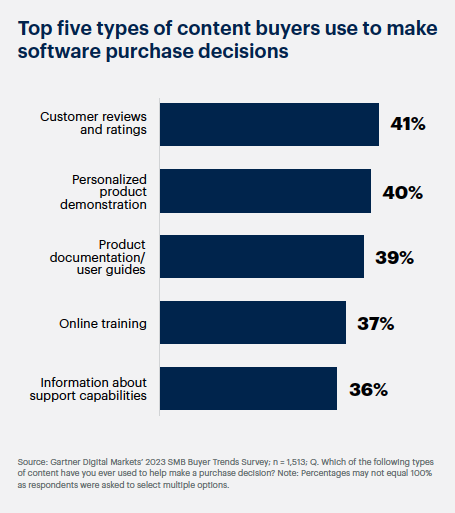
In fact, a study by Gartner found that personalized product demo videos are among the most preferred ways to influence purchase decisions.
Personalized product demonstrations are highly preferred in purchase decisions (Source: Gartner)
For context, here's a strong external example — a medical device animation from Thermo Fisher covering the ID Nimbus Presto system, a collaboration with Hamilton for automated forensic sample extraction and purification.
Here's how we've done this ourselves. For Edwards Lifesciences, we built a 3D medical device animation demonstrating their fluid management system in real-time critical-care scenarios — anatomical accuracy, product modeling, and fluid simulation combined into clear medical device visualization. For OrthAlign, we introduced their Lantern handheld surgical navigation device through a 2.5D animation explaining setup, integration, and surgical accuracy.
Because device-launch content often supports regulated claims, our scientific animation process builds in healthcare-specific, FDA-ready compliance review — so every frame is accurate enough for surgeons, clinicians, procurement teams, and regulators alike.
For healthcare brands, product demonstration videos are vital for convincing potential buyers of the efficacy and safety of their medical products.
Aiding in the decision-making process of medical professionals and procurement teams.
These healthcare marketing videos also help establish the brand as a credible authority that other healthcare consumers can rely on.
Want more device examples? See 8 real case studies of custom animation for medical devices.
Hospitals, universities, and training institutes use 3D medical animation to visually walk through complex procedures, minimizing the need for cadavers or physical demos. This builds confidence among practitioners and trainees.
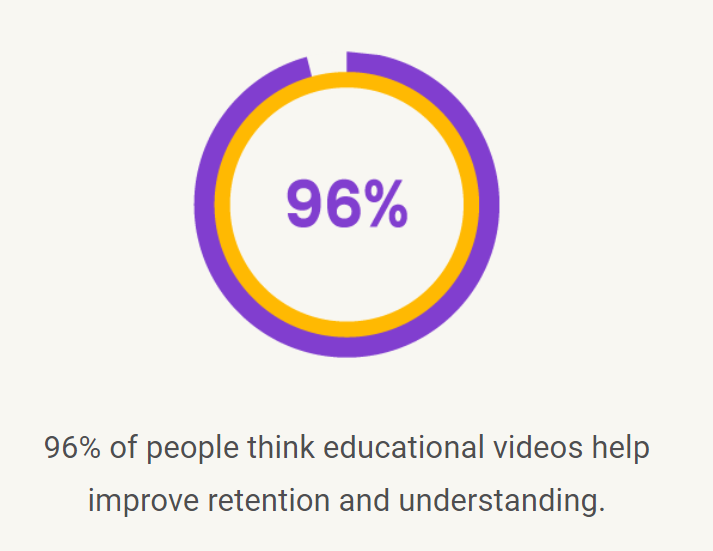
Our latest video marketing survey found that 96% of people find animated educational videos useful in increasing retention and understanding.
Videos are a great tool for boosting retention and understanding (Source: B2W’s Video Marketing Survey 2024)
And when you shift your focus to medical animation, this finding holds even more significance.
But in this scenario, educational videos become training videos or tutorial videos.
Such health animation videos are an amazing medium to:
These healthcare explainer videos provide step-by-step guidance to ensure thorough understanding and proper implementation.
The video below helped BD educate new medical professionals on the correct usage of urinary catheters and turn their message into an educational source that can be referred to multiple times during medical training.
B2B healthcare brands that use medical animation in their training content build a more coherent dialogue with their audience.
It can either be a discourse on a self-medication procedure for patients. Or it can be a visual guide for medical professionals on how to use their medical products and services. Either way, such videos:
You get the point.

One animated training video seen by 5,000 nurses beats a 40-page PDF seen by none — which is why Broadcast2World builds dedicated animated training videos for healthcare staff, covering clinical onboarding, compliance procedures, protocol walkthroughs, and platform adoption.
Healthcare animation helps train staff efficiently—breaking down SOPs, emergency protocols, or product handling instructions into engaging animated sequences.
See how this played out for UCI's supply-chain training (#26) and Astellas's internal data-integrity training (#17) below.
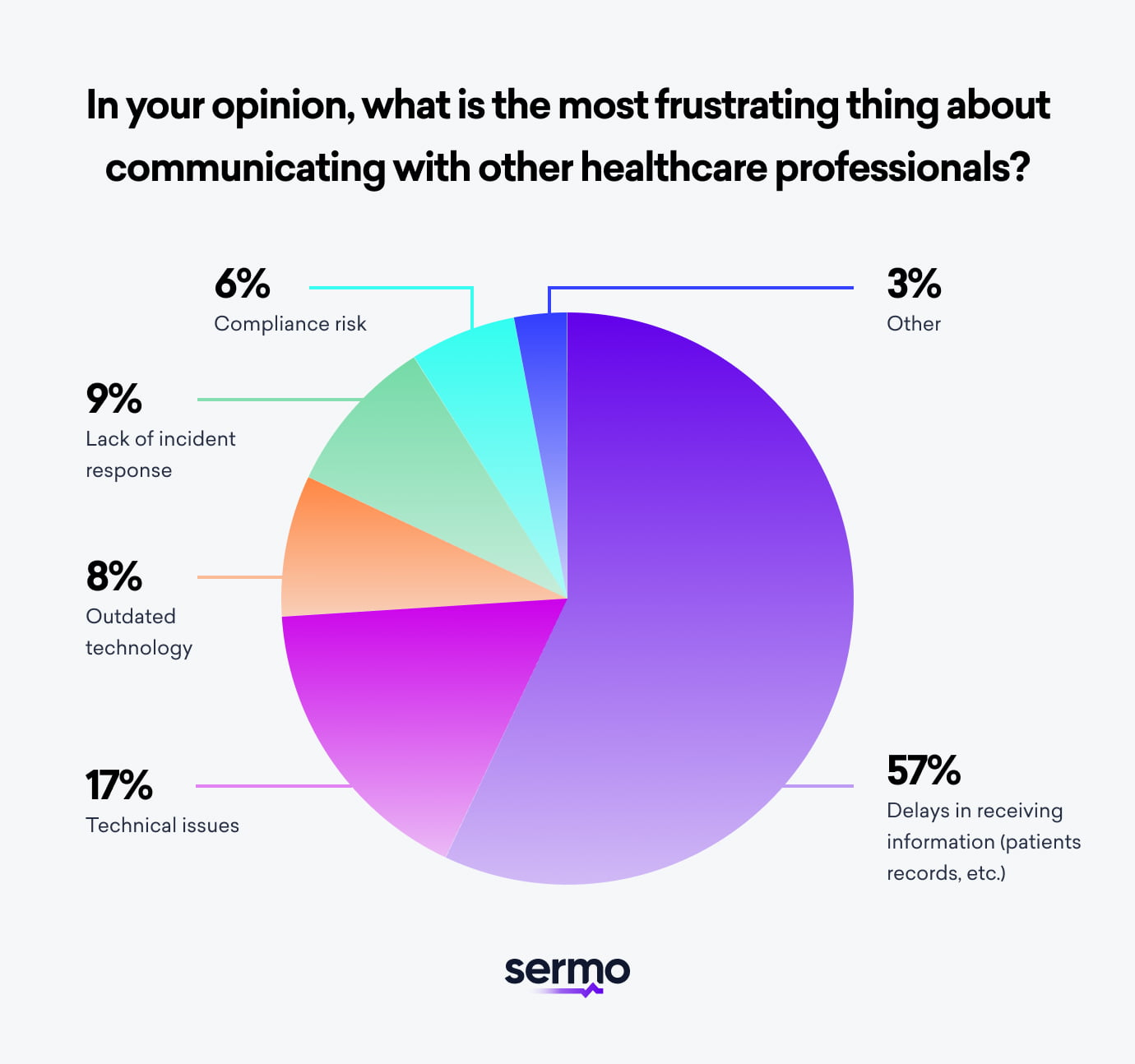
In a survey on the importance of effective communication in healthcare, Sermo found something interesting. They saw 57% of medical professionals finding delays in receiving information, the most frustrating part about healthcare communication.
Information delay is a big hurdle in healthcare communication (Source: Sermo)
As a B2B brand in healthcare, it’s easy to look at this from a corporate perspective. But I want you to look at these numbers from the eyes of a medical professional.
Delays and miscommunications can lead to a grave medical mistake that may not be overturned.
Ultimately, this puts patient care at risk, and no medical professional would want to find themselves in such a situation.
This is what makes healthcare communication one of the most important aspects of medical care.
Medical animation in the form of internal communication videos can help you out here. Here is a great example of animated video series from Grifols:
They help establish clear and scientific communications in healthcare organizations, be it among patients or employees within the B2B healthcare brand.
These can include updates on new protocols, an overview of company policies, or announcements of organizational changes.
For B2B healthcare brands, this ensures that all medical personnel are aligned with the company's goals, procedures, and values.
Leading to improved efficiency and a stronger organizational culture.
In the pharmaceutical and biotech industries, innovation happens at a molecular level—and that’s often difficult to explain through static visuals or lengthy documents. This is where medical animation becomes a game-changer.
From illustrating drug mechanisms of action (MoA) to showing complex molecule interactions, medicine animation simplifies the science and turns it into a compelling story. These medical animation videos help translate dense clinical data into visually engaging narratives that are easy for both specialists and non-specialists to grasp.
Whether you're presenting to investors, educating healthcare professionals, or launching a new therapy to the market, 3D medical animation lets you demonstrate how your product works inside the body—at the cellular or molecular level—without overwhelming your audience.
This makes scientific animation and medical animation services an essential asset for pharma marketers, medical affairs teams, and biotech startups looking to raise awareness, secure funding, or build trust with stakeholders. In an industry where accuracy and clarity are everything, healthcare animation helps you deliver both—beautifully.
Planning a launch? Our guide to pharmaceutical marketing shows where MOA videos fit in the wider campaign.
Not every healthcare video is made for a waiting room or a sales deck. A growing share runs as paid social, YouTube pre-roll, connected TV and e-commerce placements, aimed at patients, members and caregivers rather than clinicians. These are healthcare ads, and more brands now make them with healthcare animation instead of a live-action shoot.
The reasons are practical. Animation needs no patient actors or model releases, which keeps privacy and consent simple. It can show what's happening inside the body, something a camera can't. Medical, legal and regulatory reviewers can approve the script and storyboard before anything is animated. And when a benefit, price or regulation changes, you update a scene instead of booking a reshoot.
The ads that land don't read out a feature list. They pick one person with one worry and show it getting solved. The patient is the hero and your product is the help they didn't know they had. That's why the strongest healthcare commercials speak to the heart and the gut first (trust, relief, a little hope) and only then give the brain its proof point.
It also changes how you brief and measure the work. A medical marketing video built for awareness or purchase intent is judged on engagement, cost per acquisition and shares, not only comprehension. Our Noni by New Age campaign (#25) is a good example: reused across YouTube ads, e-commerce listings and wellness campaigns, it drove 3.5× higher engagement, 52% longer watch time and a 28% lift in conversions versus the brand's previous launches. So plan the ad as a campaign asset from day one, with 6-, 15- and 30-second cut-downs, platform-native formats and one clear call to action.
For channel planning, cut-downs and distribution, see our healthcare video marketing guide. Here are four animated healthcare ads we've produced, each built for a different audience.
Most people buying medical animation ask this before anything else. The answer is that the message picks the style, not the budget alone.
A simple test: if the hardest part of your message happens inside the body or inside a device, start with 3D. If it happens in the patient's head (a worry, a choice, a habit), 2D will usually tell it better and for less.
Healthcare brands use explainer videos to simplify healthcare offerings while clearly communicating how they can be used in medical scenarios. The videos become a tool for building trust and establishing authority.
After going through the healthcare animation videos listed below, you'll better understand the effectiveness and charisma of these videos.
Planning a medical animation or healthcare explainer?
Share your brief and you get a custom quote within 24 hours. We build review time for your medical and regulatory team into the schedule before animation starts. Custom 60-second videos start at $2,400.
Get my custom quoteWith all the examples we saw along the way, I can say one thing with absolute certainty. Videos are going to play an even bigger role in B2B healthcare marketing. And there are some recent video marketing statistics that point to this exciting future:
So what’s the way forward from here if you’re a B2B in the healthcare industry?
You need to put more emphasis on your B2B videos and take it to the next level. And the best way to do that is through explainer video production and video animation.
I hope this article becomes your reliable guide that aids in your healthcare marketing endeavors, helping you dominate the healthcare space and increase your impact in the long run
Shrija is a content writer at Broadcast2World, where she breaks down the nuances of animation, video production, and B2B storytelling through her engaging content. with a background in English and Mass Communication, she seamlessly blends strategic thinking with audience- focused storytelling
No Comments Yet
Let us know what you think